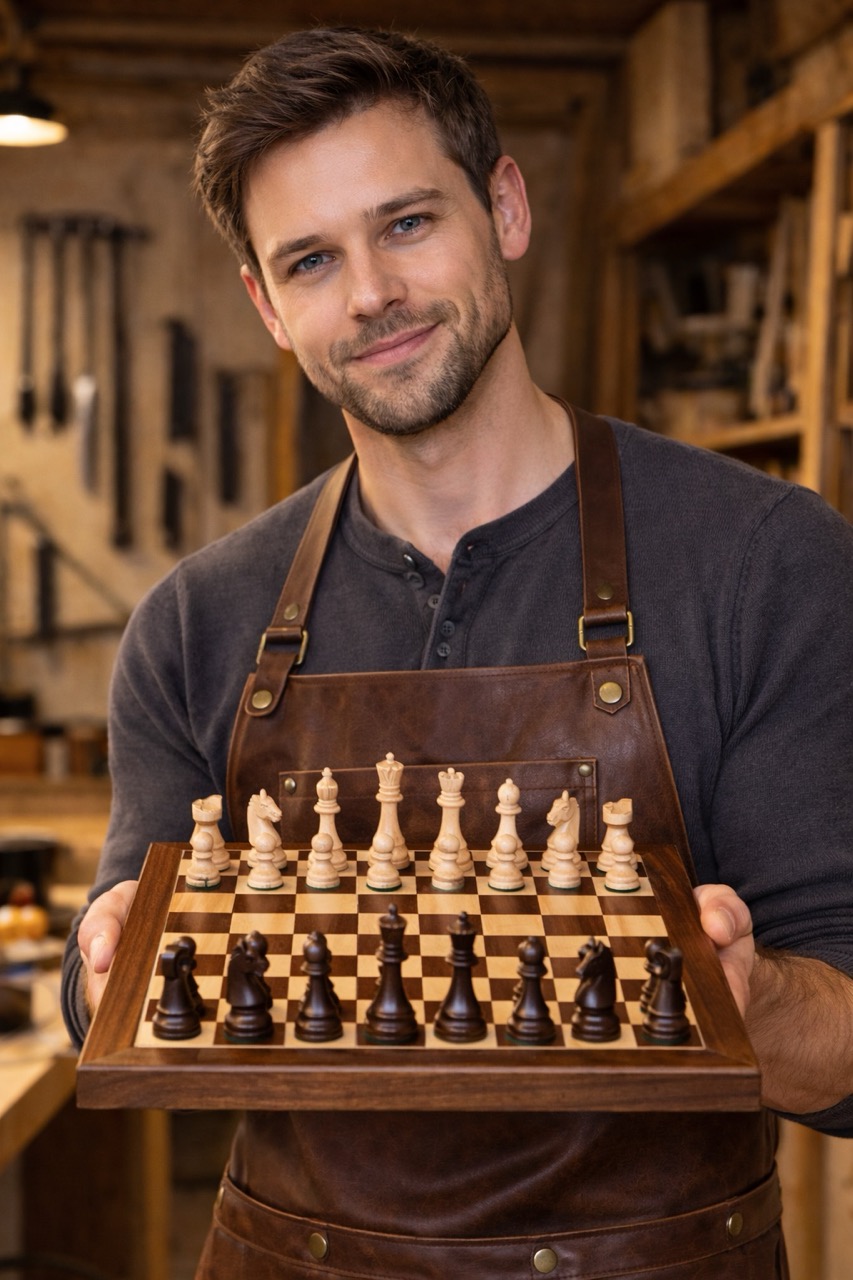
Ethan Carter grew up in a quiet town in Vermont, where winters felt endless and time moved slower than anywhere else. His father wasn’t a man of many words. He didn’t give long speeches or offer advice the way other dads did. But every Sunday night, without fail, he would set a chessboard on the kitchen table.
No phones. No television. No distractions. Just the soft sound of wooden pieces sliding across the board — and a kind of silence that didn’t feel empty.
His father made tea in the same dented kettle every week. Ethan still remembers the sound of porcelain touching wood, the pause before the first move, the way the whole house seemed to settle when the board came out. Nothing dramatic happened on those Sundays. That was the point.
Ethan didn’t realize it then. But those nights were everything.
the last game they never finished
When Ethan left for college, those Sundays stopped. Life got busy. Calls became shorter. Visits became rare. And then one day — without warning — his father was gone. No goodbye. No final game. Just a chessboard left behind.
For years, Ethan couldn’t bring himself to touch it. It sat in a drawer, waiting.
Grief did something strange to memory. It made small details feel sharper than the big ones. Ethan could not always remember the last conversation they had. But he could remember exactly how his father held a knight between thumb and forefinger, or how he would smile without looking up when Ethan finally spotted a move two turns too late.

the life he thought he was supposed to live
Ethan did what he thought his father would’ve wanted. He worked hard. Stayed disciplined. Built a future that made sense on paper. He graduated near the top of his class and landed a job in a research lab — clean, predictable, respected.
The kind of life people admire. But every night, under the hum of fluorescent lights, something felt off. The work was precise — but hollow. Days blurred together. And somewhere deep down, he felt like he had traded something real for something safe.
He became good at answering people with the version of his life they expected to hear. The job was going well. The pay was solid. The future looked stable. All of it was true, and none of it felt like an answer to the part of him that still missed the weight of wood, the patience of ritual, and the kind of work that stayed warm in the hands.
the night everything came back
One evening, after a long day at work, Ethan opened a drawer looking for something else. And there it was — that old chessboard. Worn. Uneven. Imperfect.
He hesitated, then picked it up. Ran his fingers along the chipped edges. And suddenly he wasn’t in his apartment anymore. He was back at that kitchen table, across from his father, waiting for the next move.
For the first time in years, Ethan didn’t feel loss. He felt something else. Presence.
That was what startled him most. The board did not make him feel broken open. It made him feel invited back. Not to the past exactly, but to a part of himself he had stopped visiting.
the first board wasn’t good
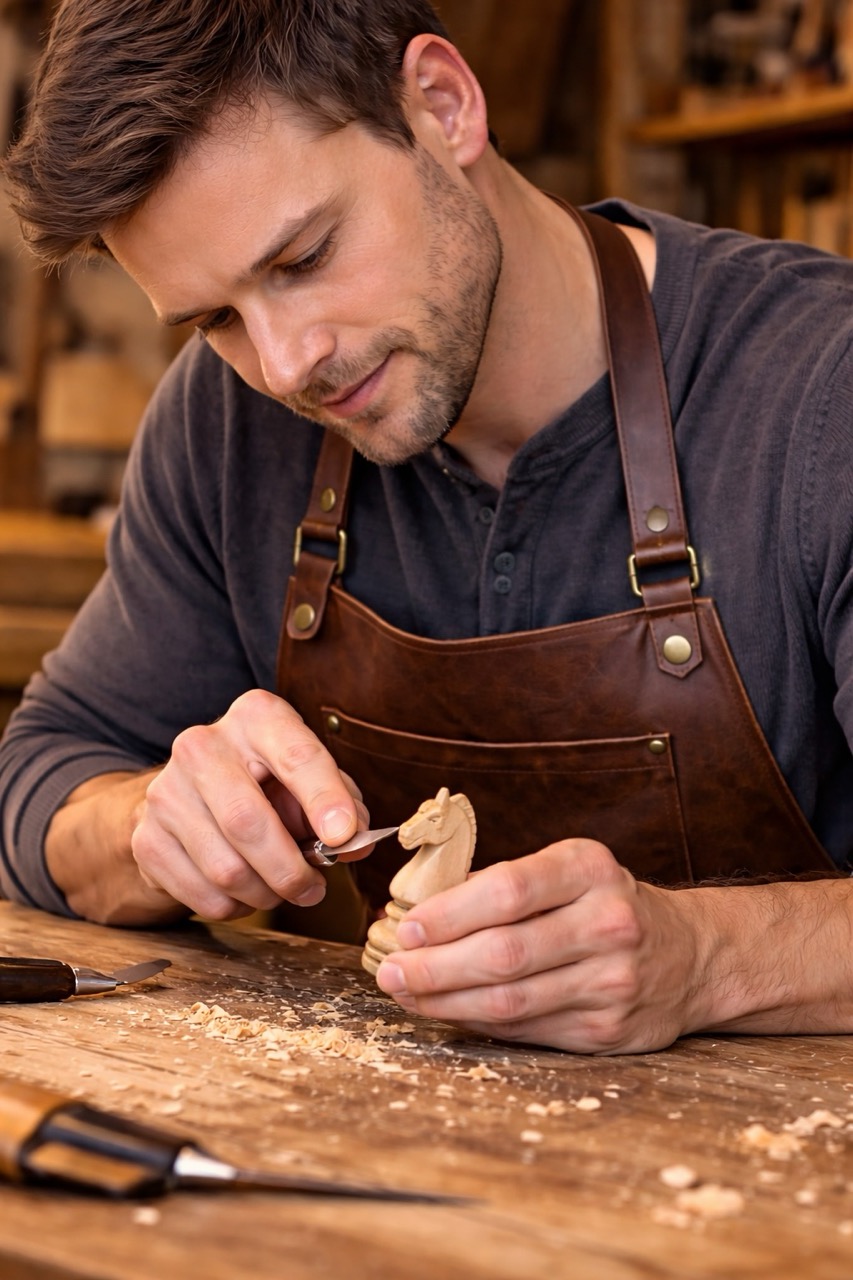
He didn’t quit his job. Not yet. Instead, he bought a cheap set of tools and started working out of his garage. Late nights. Weekends. Trial and error.
His first chessboard wasn’t good. The edges were rough. The finish uneven. One square sat slightly higher than the rest. But it was his. And for the first time in years, Ethan felt proud.
He kept that first board anyway. Not because it was beautiful, but because it proved something important: skill could be learned, but meaning had to be found. The board gave him both a problem to solve and a reason to keep showing up.
the moment everything changed
One afternoon, his eight-year-old son Noah walked into the garage. “Can I help?” he asked. Ethan handed him a piece of sandpaper. A few minutes later, his daughter Lily joined too — brushing wood dust off the table, asking questions, laughing when shavings stuck to her sleeves.
And just like that, something clicked. What started as a quiet escape became something else: a ritual, a shared space, a second chance.
He finally understood what his father had built. It was never about the game. It was about being there. Fully. No distractions. No rushing. No noise. Just time.
he walked away from the “safe” life
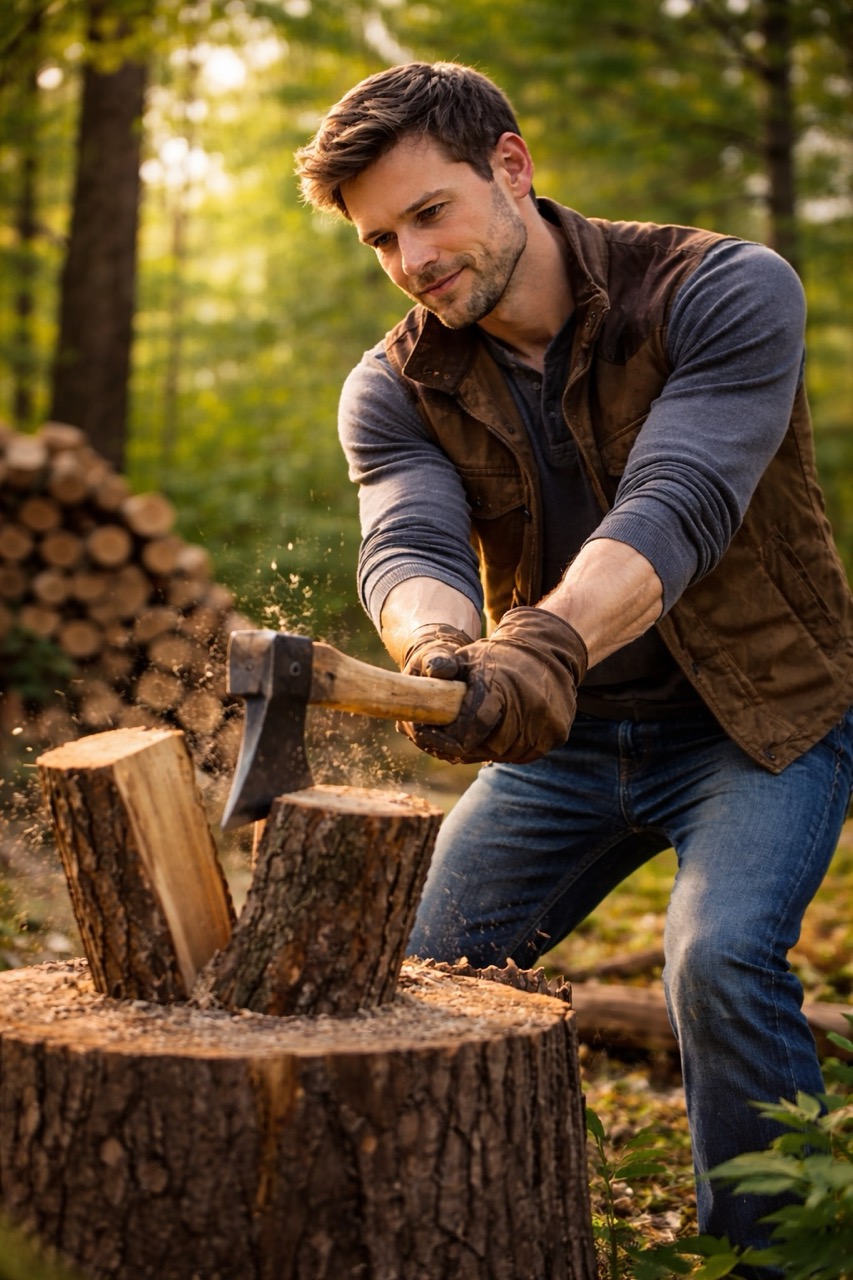
Six months later, Ethan made a decision that didn’t make sense to anyone else. He left his job. No guarantees. No safety net. Just a quiet certainty that this mattered.
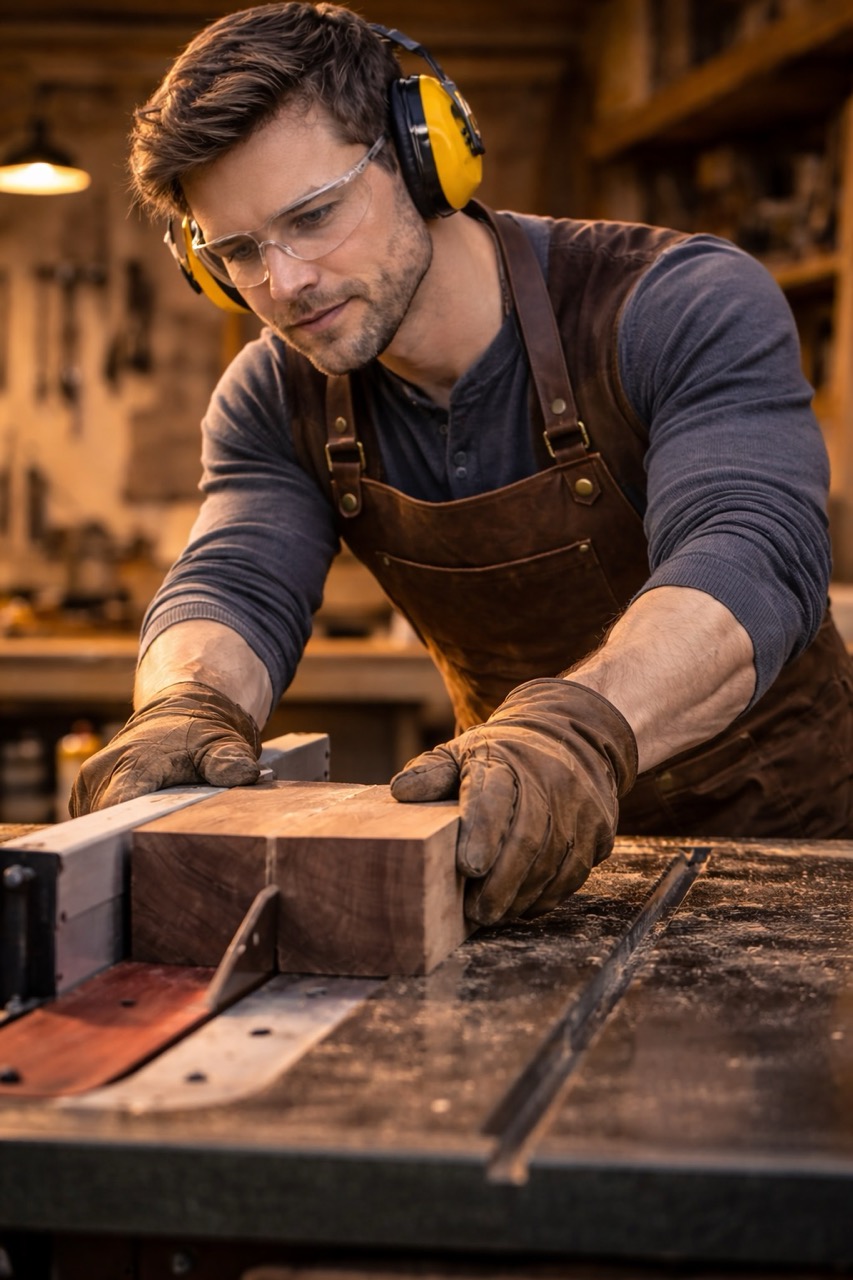
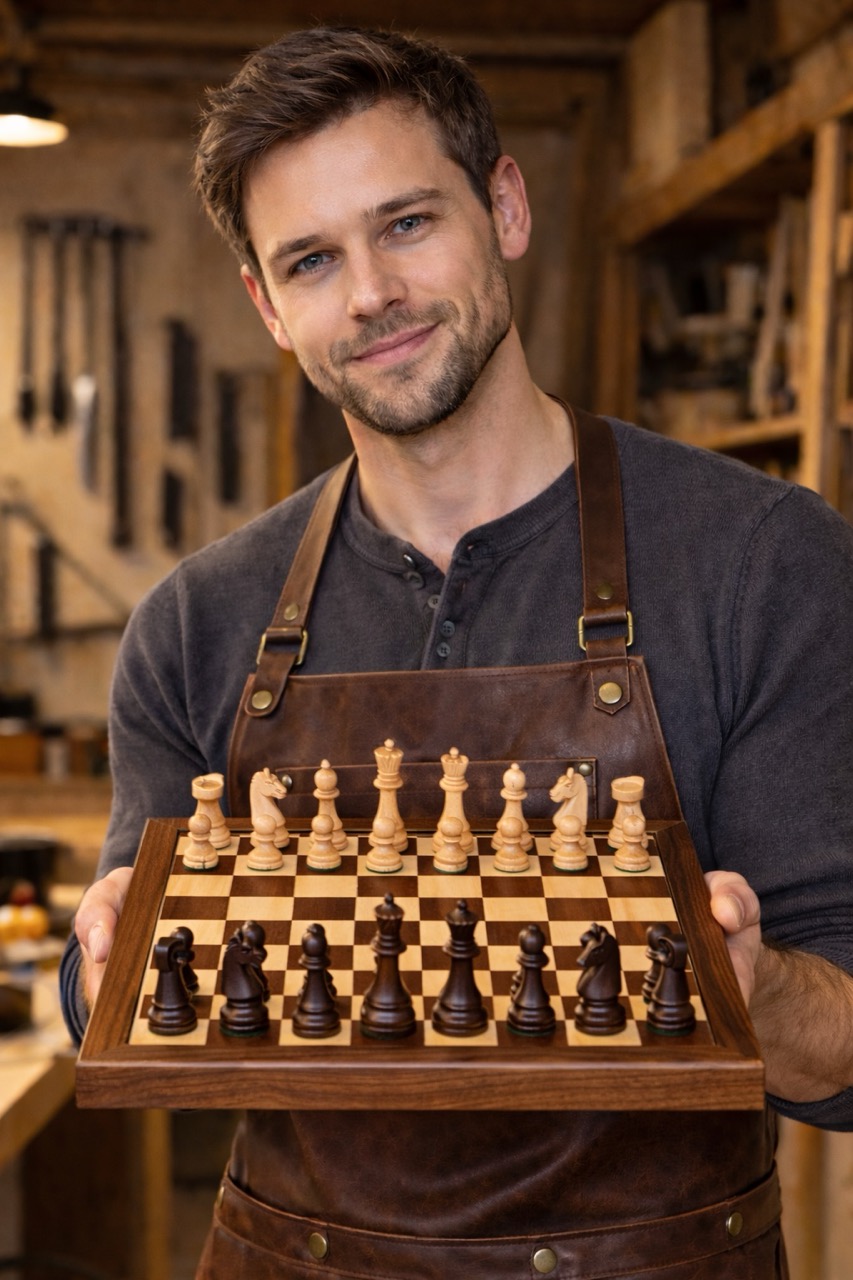
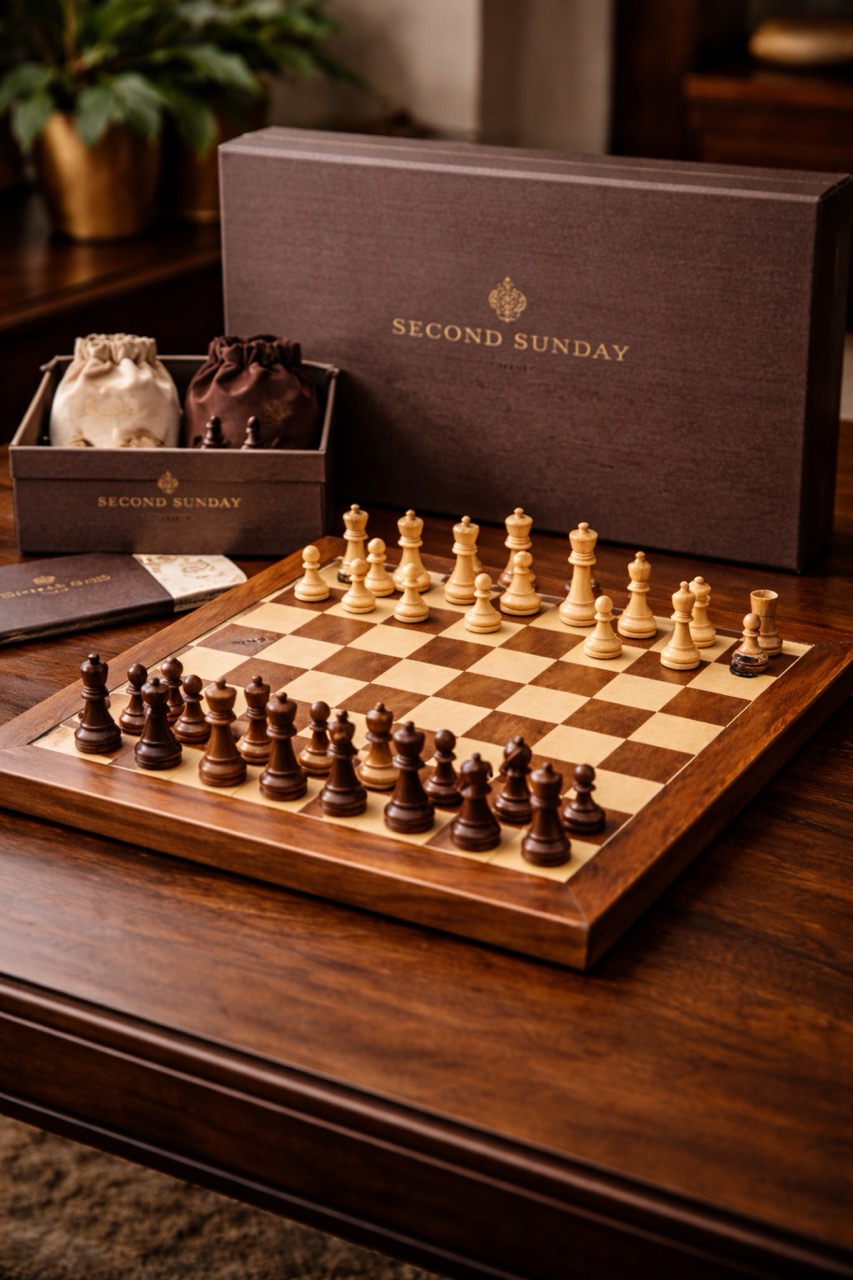
He didn’t just want to make chessboards. He wanted to make them right. He began sourcing premium hardwoods: deep, rich American walnut and smooth, light maple. He studied grain patterns, refined every edge, and balanced every piece. Each board took hours. Sometimes days.
Because to Ethan, this wasn’t just a product. It was something that would sit on someone’s table for years. Something that would hold moments — just like his father’s board once did.
That conviction shaped everything, right down to the name. He called the shop Second Sunday because that was what the work had given him: not a replica of what he lost, but another chance to build the kind of time he thought was gone for good.
from a garage to homes across america
At first, it was small: friends, neighbors, a few local orders. Then people started asking, “Do you ship?” So he took the leap. He brought his work online — allowing something that began in a quiet garage to reach homes across the United States.
And something unexpected happened. People didn’t just buy the chessboard. They felt it.
On the site, Ethan wrote about the woods he chose, the hand-rubbed finish, the patience required to get each square flush. But he also wrote about why the boards existed at all. About Sunday nights. About inherited rituals. About how craftsmanship matters most when it protects a human moment.
what people started saying
I bought this for my dad after reading Ethan’s story. We hadn’t spent time together like that in years. Now we play every Sunday again.
— Mark R., Illinois
It doesn’t feel like a product. It feels like something that belongs in your family.
— Alyssa T., California
After reading this, I taught my daughter how to play. It’s become our thing now.
— Daniel K., Texas
more than a game
Today, Noah sometimes beats Ethan. Lily still insists on setting up the board perfectly before every game. And every now and then, Ethan brings out the old chessboard his father left behind — still worn, still imperfect, still everything.
Yes, it’s a luxury chessboard. Yes, the materials are premium. Yes, the craftsmanship is meticulous. But more than anything, you’re buying something that slows time down. Something that brings people back to each other. Something that lasts.
That is the real craft behind Second Sunday. Not just wood joined cleanly, corners cut precisely, or pieces finished by hand. It is the harder craft of making room for attention in a life determined to scatter it.
Second Sunday isn’t just a brand. It’s a reminder that the moments we almost lose are sometimes the ones worth building everything around.