At 2:17 a.m., the light in Elias Thorne's workshop is still on. The rest of the house is asleep. The street outside is silent. But inside, there's the soft, steady sound of a blade moving through wood. Shave by shave. Curl by curl.
In his hands is a small bear — unfinished, but already full of something you can't quite name.
On the corner of his workbench sits a photograph. A younger Elias in uniform. And next to it, a picture of a boy smiling wide, caught mid-laugh. Jamie.
Elias doesn't talk much while he works. But if you asked him why he started carving again, he'd tell you something simple: he made a promise.
When Jamie was sick, Elias used to make up stories at his bedside about tiny animals who lived in a hidden woodland kingdom just beyond the fence line. Jamie gave them names. Drew them in the margins of hospital coloring books. Asked for new characters every night.
it was silent for a long time
After Jamie passed away from cancer, the workshop didn't just go quiet — it stayed quiet. Days turned into weeks. Weeks into months. The tools sat exactly where he left them. Dust settled. The light never came on.
Grief has a way of freezing time like that.
His wife, Sarah, was the one who gently tried to bring him back. Not with anything big. Just a suggestion:
Maybe... just carve something small.
— Sarah
At first, he couldn't. He would sit in the workshop for hours, staring at a block of wood, unable to make the first cut.
The pain wasn't only that Jamie was gone. It was that every familiar thing in the room still seemed to expect him. The half-finished shelf. The jars of carving blades. The smell of cedar. Grief made all of it feel unbearable and holy at the same time.
Their neighbor, Martha, remembers watching from across the street:
The light would flick on in the middle of the night. But nothing was happening. It felt like he was just... trying to exist in there.
— Martha, neighbor
And then, one night, something changed.
the first figure
It wasn't perfect. It wasn't detailed. It was just... a small wooden kitten. But when Elias held it in his hands, something shifted. Because it wasn't just a carving. It was a memory. It was a moment. It was Jamie.
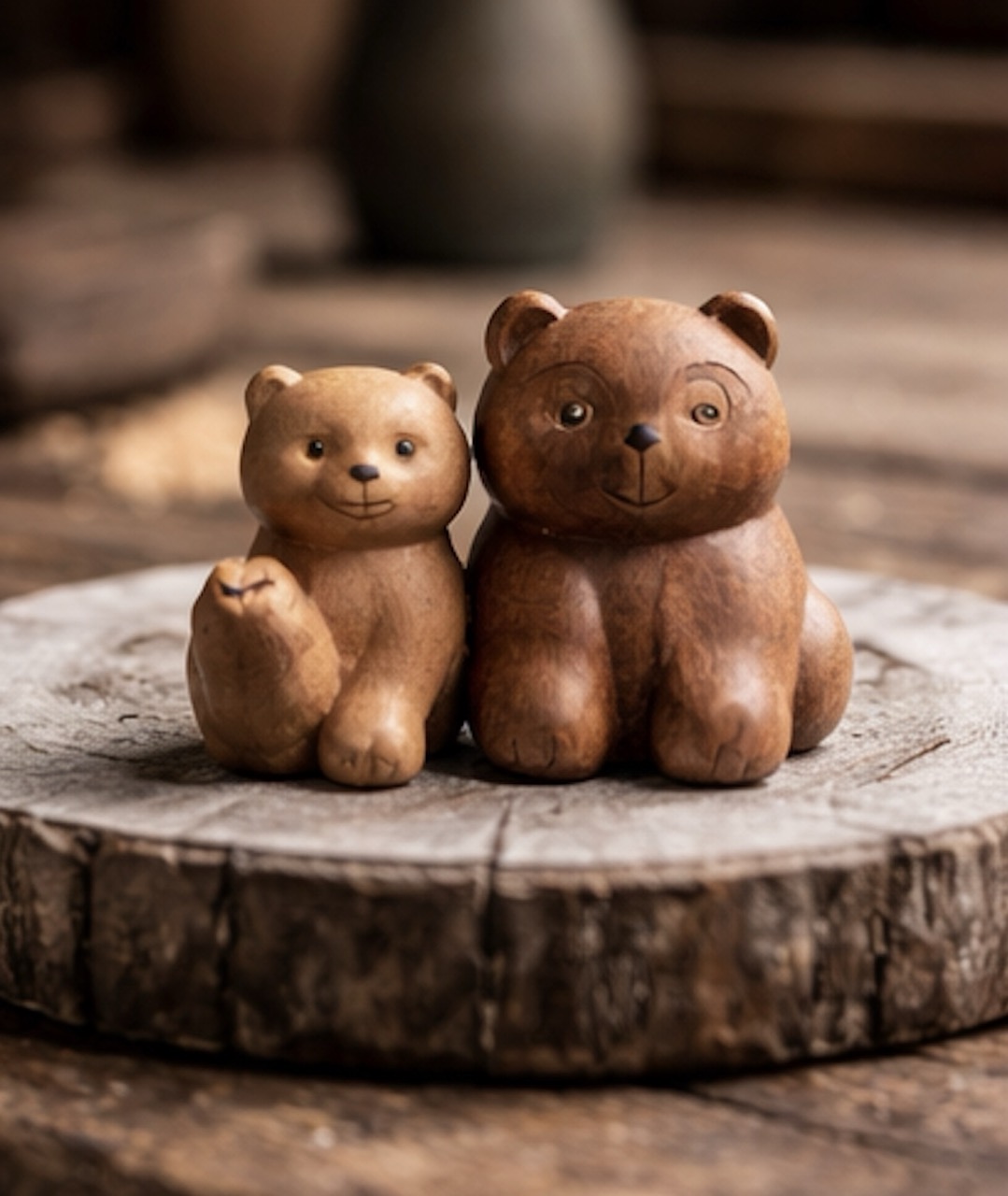
He told me it came from Jamie's kingdom. And I'll never forget that. The way he said it — it was like he wasn't alone anymore.
— Martha
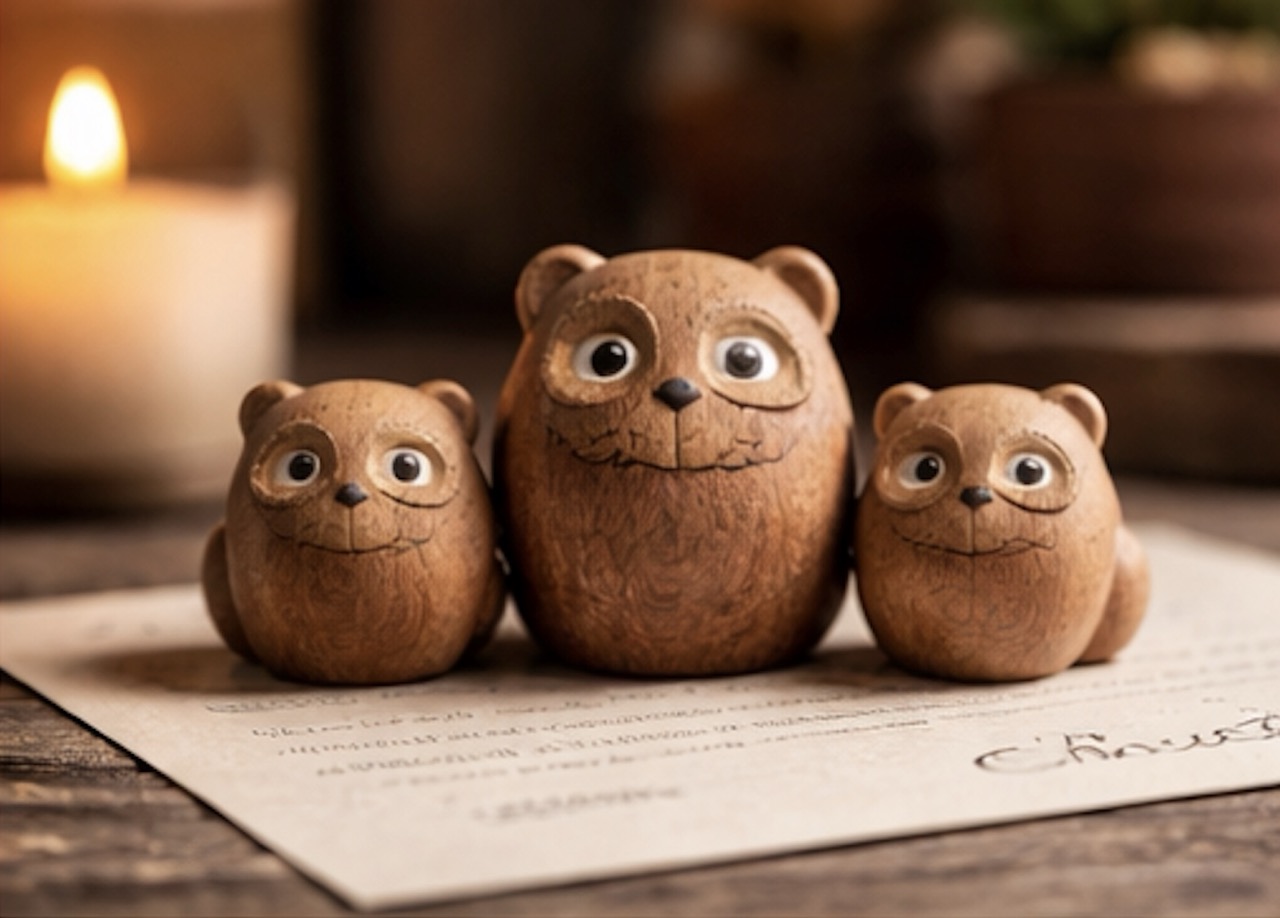
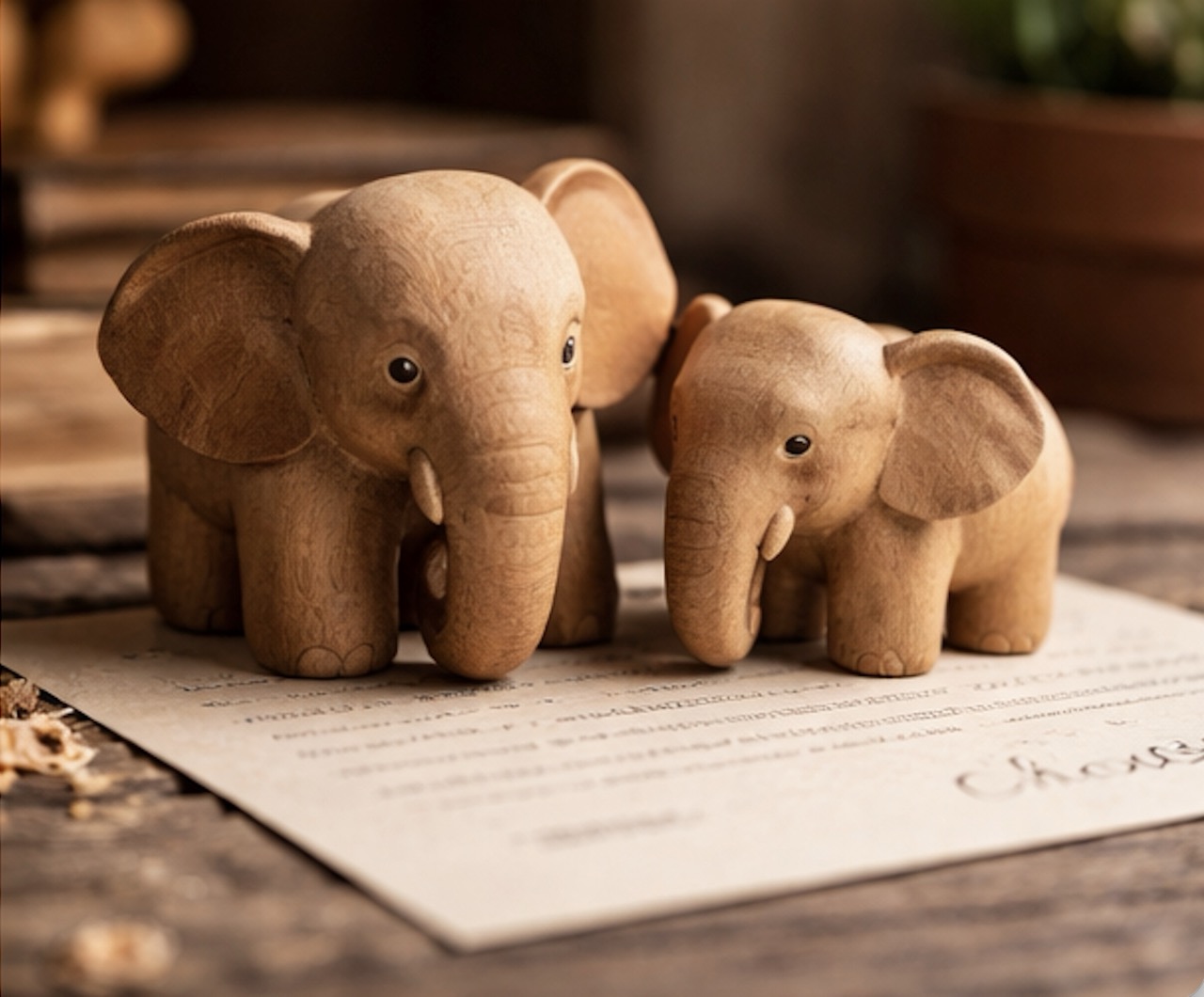
That one figure turned into two. Then five. Then a shelf full of small animals — bears, owls, cats — all with the same soft, gentle presence. Elias wasn't just carving wood. He was holding onto something that refused to disappear.
Sarah noticed the difference before he did. He still woke in the night. He still moved through the house with the caution grief teaches. But the workshop light no longer meant emptiness. It meant he was trying. Some evenings, that was enough to call hope by its name.
the story that spread
At first, no one outside the neighborhood knew. A friend asked for a piece. Then another. Eventually, Elias made a small page online — not to build a business, just to keep things organized.
But then a local newspaper ran a story: a grieving father, a quiet workshop, small wooden figures carved in memory of a son. It struck a nerve.
Within days, the story spread beyond the town. Then beyond the state. Then everywhere.
Orders didn't trickle in — they flooded. Messages came from people Elias had never met. People who saw something in his work that felt deeply, painfully familiar. Loss. Love. Memory.
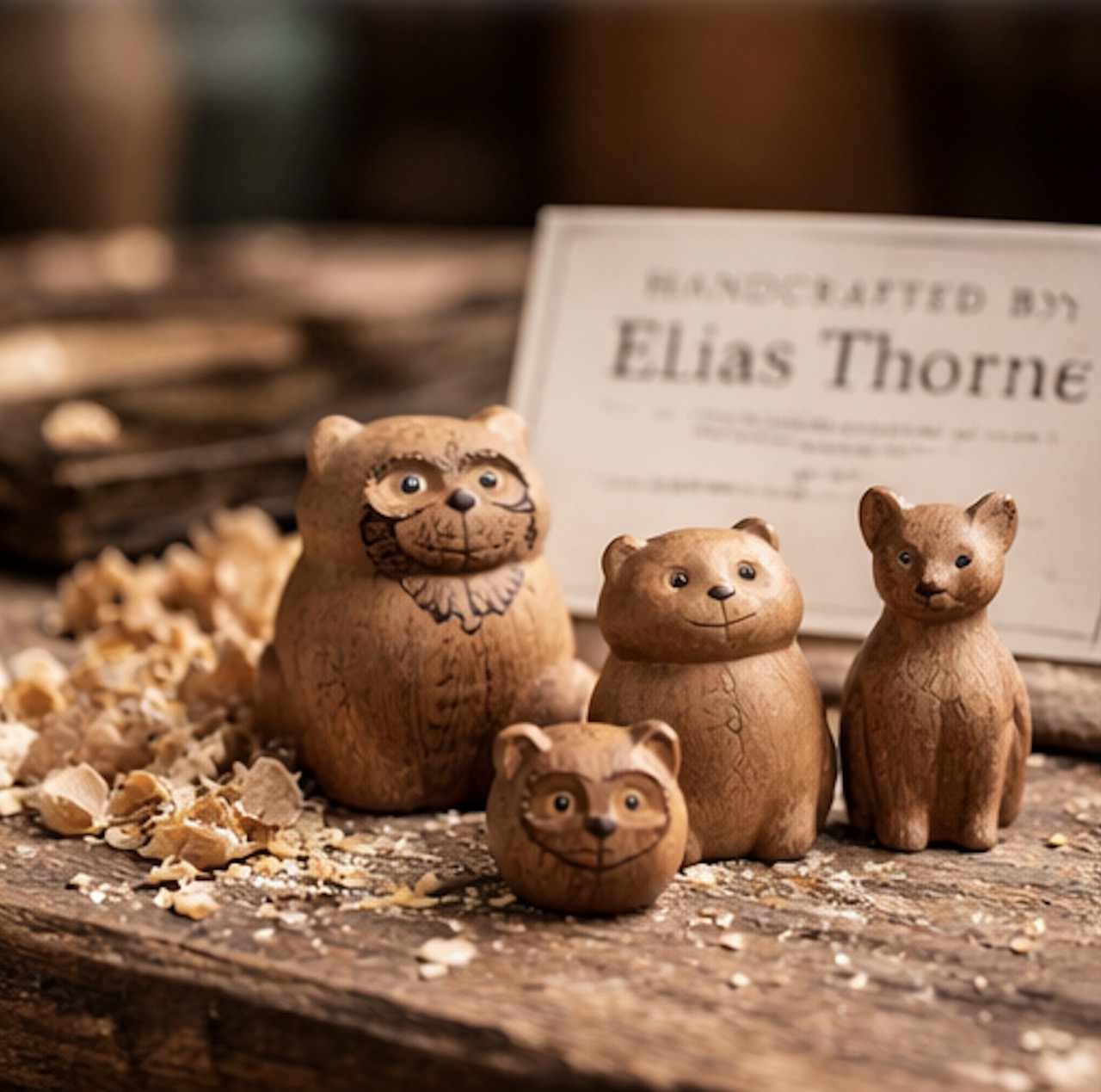
His small workshop changed almost overnight. Boxes replaced empty corners. A map of the United States went up on the wall. Pins began to appear. One state. Then ten. Then almost all of them.
But the most remarkable part? Elias didn't change how he worked. Not even a little.
Sarah helped where she could. She wrapped finished figures in paper. Wrote mailing labels. Tucked notes into boxes. But the carving itself stayed his. That was the one part he could not hand off, because the meaning of the work lived in the making.
"i'm not selling these"
Despite the waitlist. Despite the demand. Despite the fact that he could have scaled, outsourced, automated... he didn't. Every figure is still carved by hand. Every curve. Every edge. Every tiny detail.
Because to him, this was never a product.
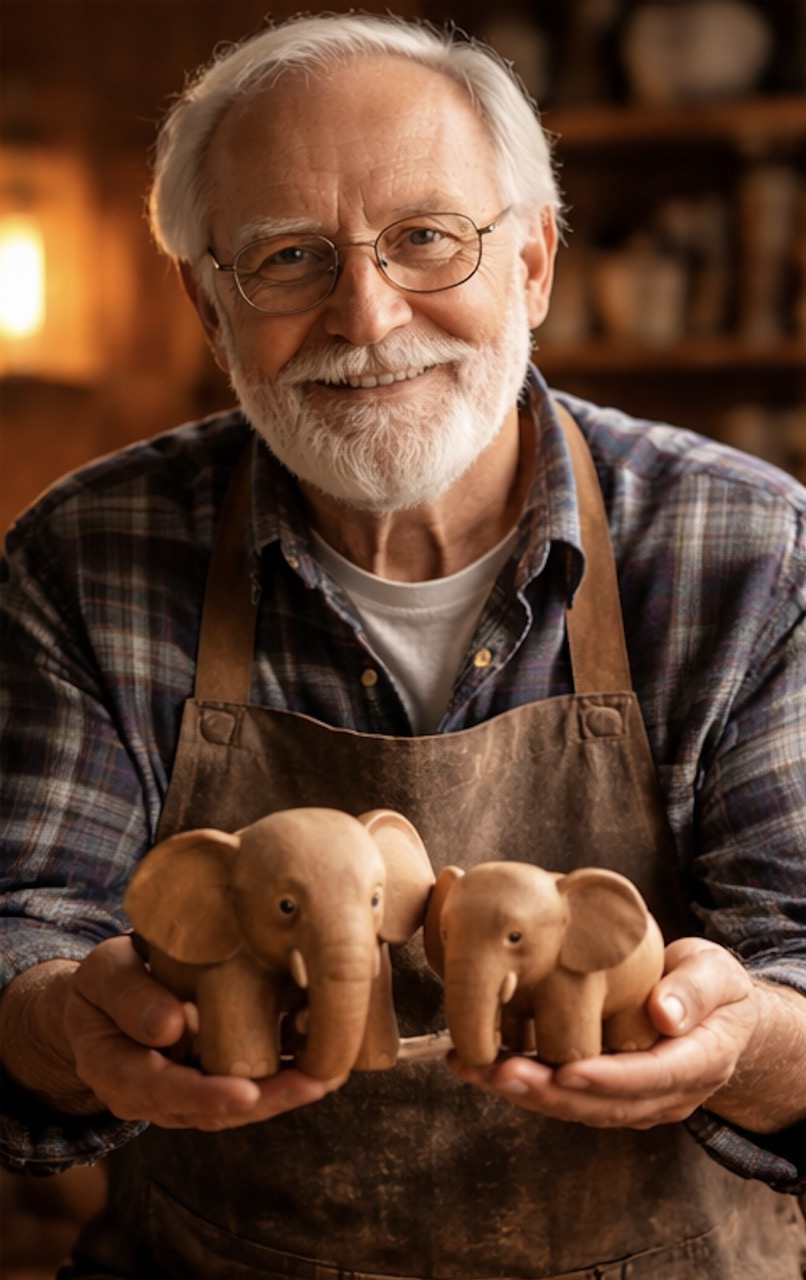
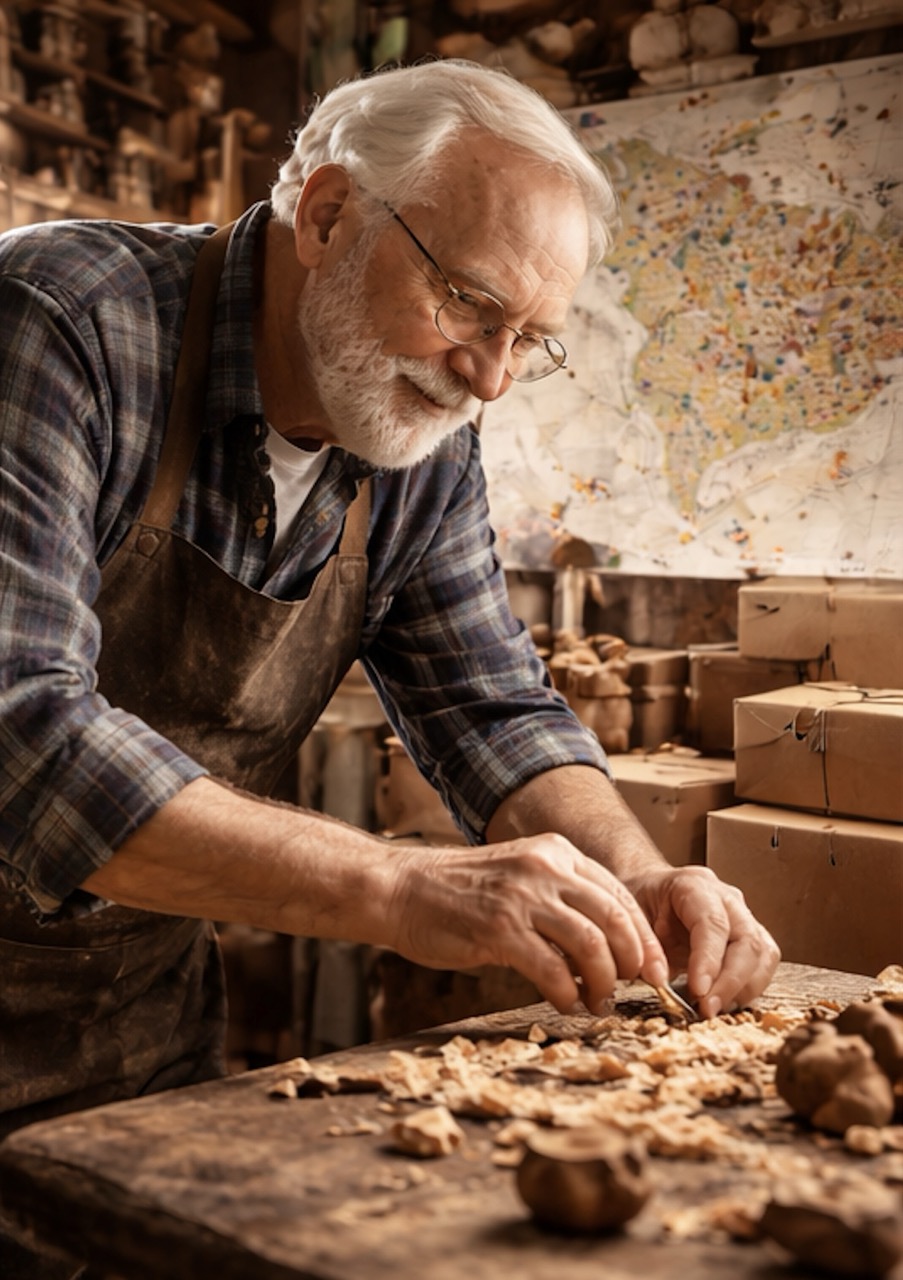
People think I'm selling these... but I'm not. I'm sending a piece of Jamie out into the world.
— Elias, to his friend Arthur
That's when it really clicked. This wasn't a business. It was something else entirely.
the messages that changed everything
The letters started arriving soon after. At first, a few. Then dozens. Then hundreds. People didn't just thank him — they told him their stories.
I lost my daughter last year. I didn't think something this small could mean so much... but it does. I hold it when I miss her.
We bought your bear after our son beat leukemia. It sits in our living room now. It reminds us of everything we fought through — and everything we still have.
I don't know why, but it makes the hard days easier.
Elias read every message. Saved many of them. Because for the first time, his grief wasn't just his. It was something shared. Something understood.
That was when the shop stopped feeling like attention and started feeling like responsibility. People were trusting him with moments they could barely describe aloud. He answered as many as he could, often late at night after the carving was done, because he knew what it meant to be met gently in the middle of pain.
what lives on
Today, if you walk into Elias's workshop, it still feels quiet. Still smells like cedar. Still looks, at first glance, like nothing extraordinary.
But look closer.
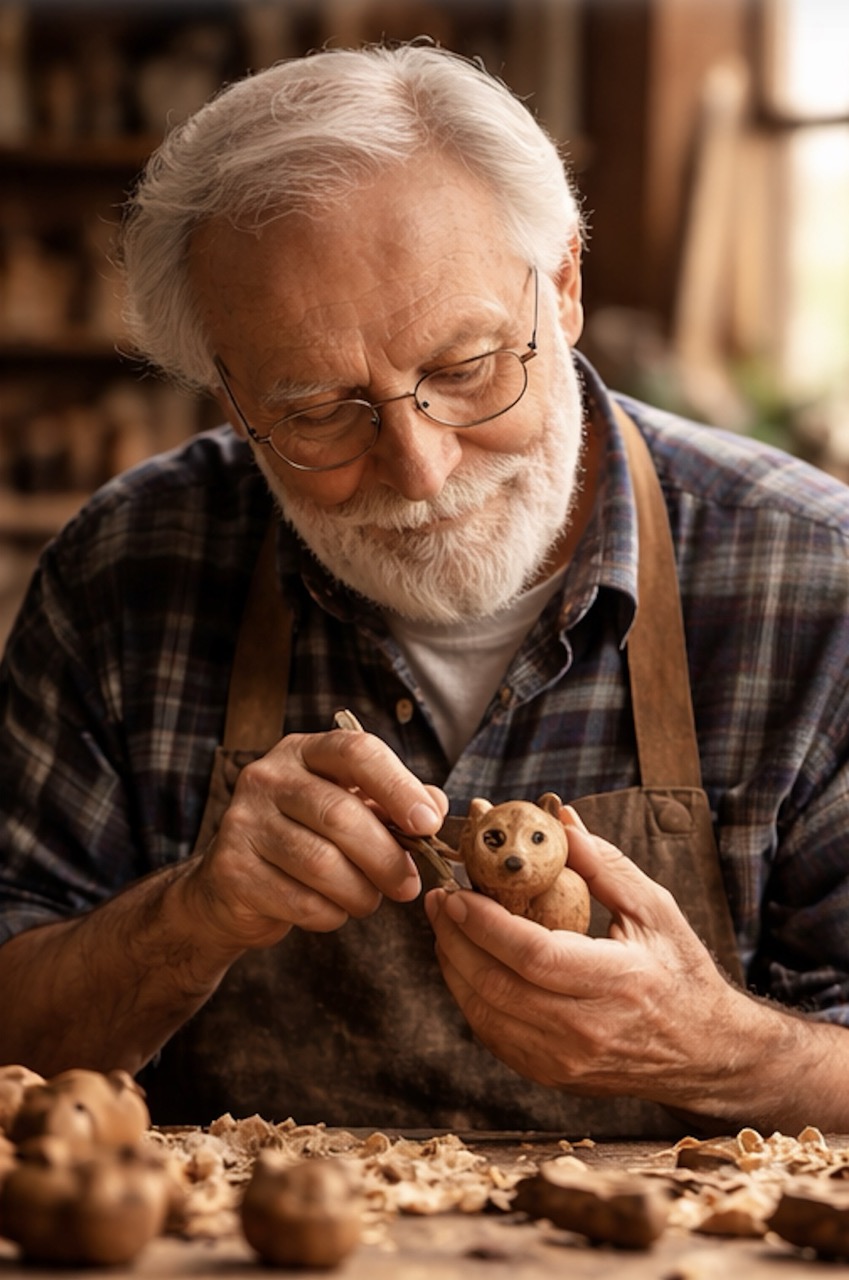
Behind him, shelves filled with hundreds of small figures. On the wall, a map covered in pins stretching from coast to coast. And in his hands — another piece, slowly taking shape. Another memory. Another promise, being kept.
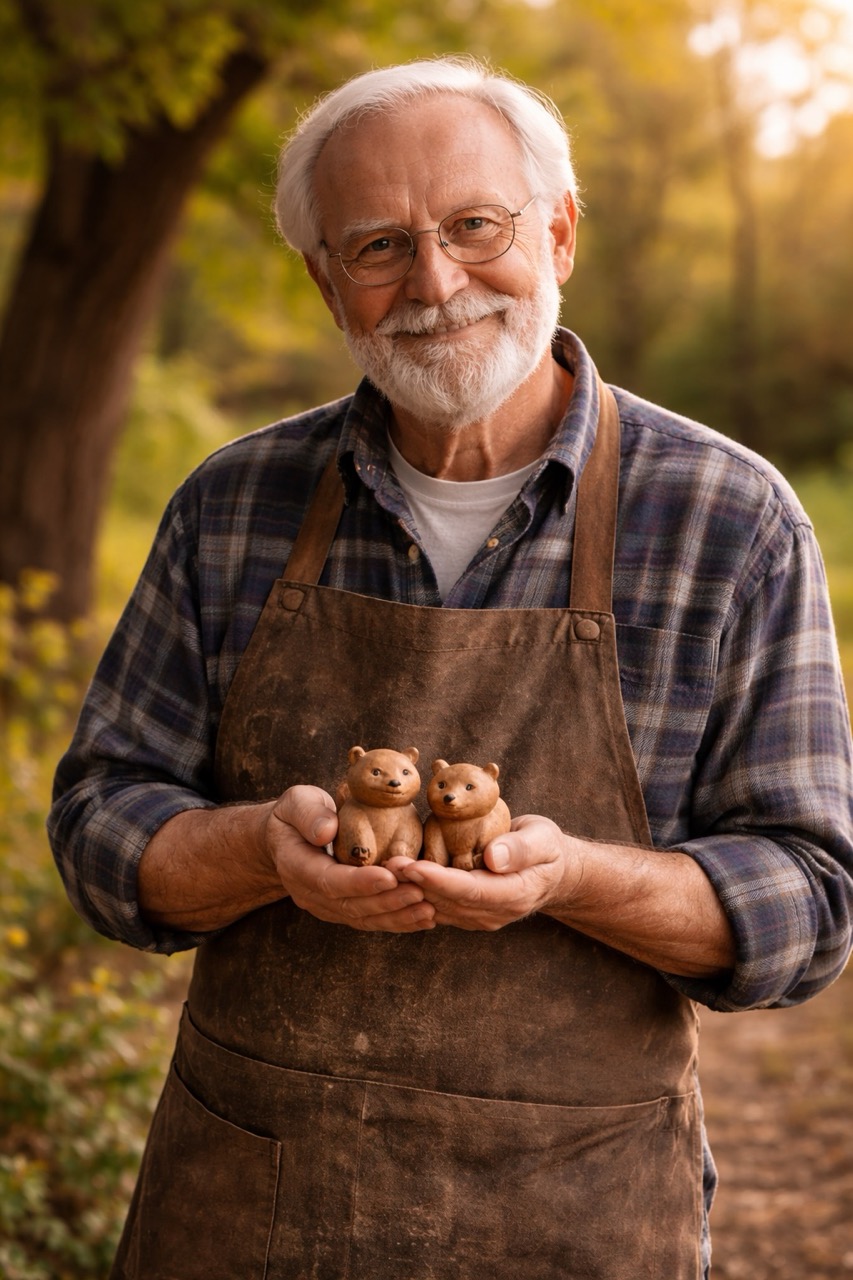
Somewhere, in thousands of homes across the country, his carvings sit on shelves, desks, bedside tables. Held during hard moments. Gifted during meaningful ones. Quietly becoming part of other people's stories.
Elias never set out to reach the world. He just didn't want to forget his son. But somehow, through patience, love, and a blade against wood... he built something that helps others remember, too.
And maybe that's why people hold onto his work the way they do. Because it's not just a carving. It's proof of something we all hope is true:
That love doesn't end. It just finds a new way to stay.